




.png)


Common Mistakes Patients Make When Getting Dental Implants Abroad
.webp)
Why Dental Implants Abroad Require More Than Just a Price Decision
In the last decade, dental tourism has transformed from a niche option into a global healthcare trend. Thousands of patients from the United Kingdom, France, Germany, Spain, Italy, and the United States now travel abroad every month to restore their smiles with dental implants.
The main driver is obvious: cost difference. In many Western countries, dental implants are considered one of the most expensive restorative procedures in dentistry. However, countries like Turkey have positioned themselves as global leaders by offering high-quality implant treatments at significantly lower prices, often with faster treatment timelines and luxury patient experiences.
But behind this growing trend lies a serious issue: many patients make critical mistakes during their decision-making process, and these mistakes can directly impact long-term implant success, bone health, aesthetics, and even overall oral function.
Dental implants are not a cosmetic purchase. They are a surgical and biological integration process that requires precision planning, correct material selection, and long-term follow-up.
Understanding what can go wrong is just as important as understanding the benefits.
The Psychology Behind Dental Tourism Decisions
Before we go into clinical mistakes, it is important to understand why patients make bad decisions in the first place.
Most patients searching for dental implants abroad are under one or more of these pressures:
- Financial stress due to high prices in their home country
- Long waiting lists in public healthcare systems
- Emotional urgency due to missing teeth or low confidence
- Social media influence and “instant transformation” marketing
- Lack of medical knowledge about implant procedures
This emotional environment often leads to fast decision-making instead of informed decision-making, which is where most mistakes begin.
Why Patients Travel Abroad for Dental Implants
One of the strongest reasons patients travel abroad is the financial gap between countries. Below is a realistic comparison of average market prices for full dental implant treatments:
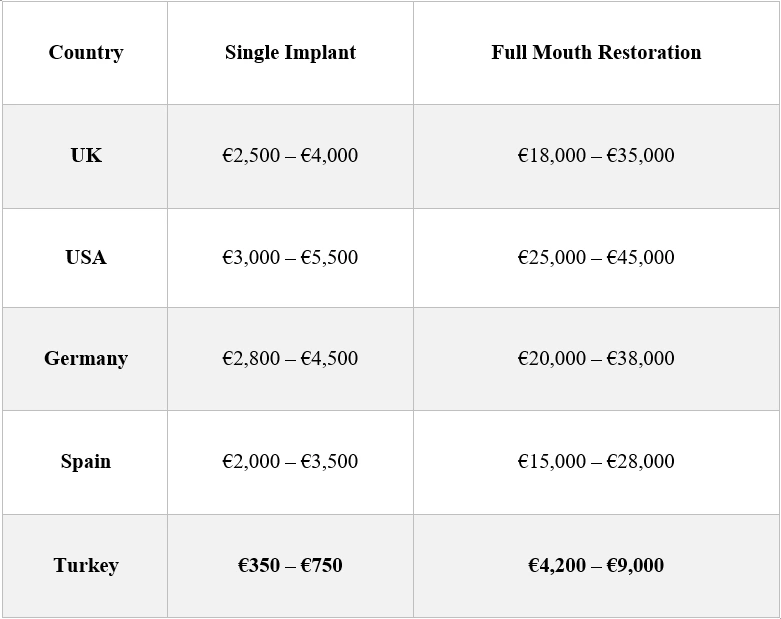
This means patients can save 60% to 80% of total treatment costs by choosing Turkey — even when including flights, accommodation, and transfers.
However, this is where the biggest mistake happens:
many patients focus only on the price difference and ignore clinical quality, implant brand, and long-term maintenance costs. A cheaper initial price does not always mean a better long-term outcome.
Mistake #1 — Choosing Clinics Based Only on Price (The Most Dangerous Mistake)
This is by far the most common mistake in dental tourism.
Patients see offers like:
- “Full mouth implants €1,000”
- “Teeth in 24 hours cheap package”
- “Hollywood Smile all-inclusive deal”
And immediately assume all clinics in that country offer the same standard.
However, in reality, dental implant pricing depends on:
- Implant brand quality
- Surgeon experience
- Digital planning technology
- Bone graft requirements
- Sterilization protocols
- Laboratory quality (crowns & prosthetics)
When patients choose based only on price, they often ignore the most important factor: biological compatibility and long-term success rate.
⚠️ What can go wrong:
- Implant rejection
- Infection due to poor sterilization
- Incorrect bite alignment
- Bone loss over time
- Aesthetic mismatch in smile design
Even if the initial cost is lower, corrective treatments later can become significantly more expensive.
Mistake #2 — Not Understanding the True Total Cost (Hidden Financial Risks)
Many patients only compare “advertised prices” without calculating the full treatment cost structure.
💰 Real cost breakdown (what patients often DON’T consider):
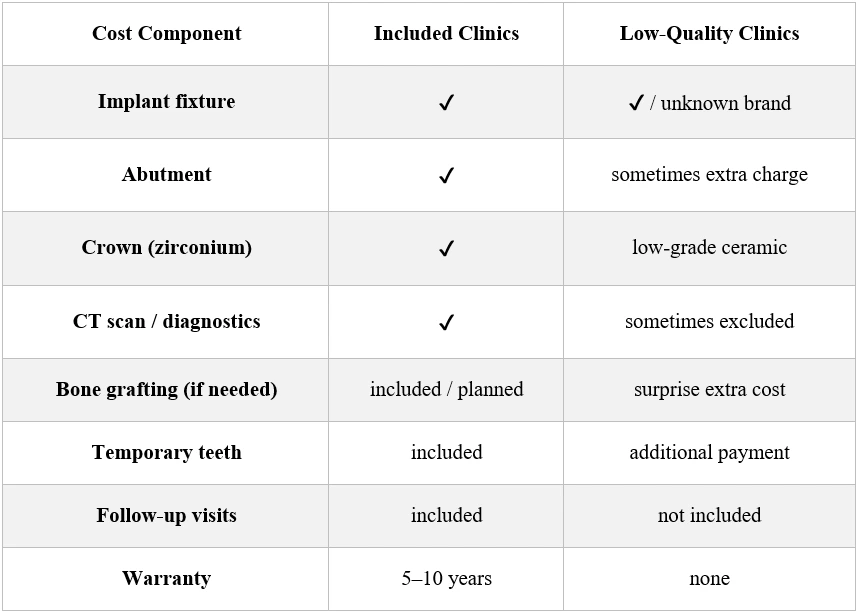
📌 Hidden cost reality:
Many patients start with a €1,000 offer and end up paying €6,000–€8,000 after “unexpected add-ons”.
Mistake #3 — Not Verifying the Implant Brand
One of the most important clinical mistakes is ignoring implant brand quality.
Dental implants are not all the same — they vary significantly in:
- Surface technology
- Bone integration speed
- Long-term stability
- Infection resistance
🦷 Premium implant brands:
- Straumann (Switzerland)
- Medigma ( Germany )
- Medentica ( Straumann Group - Germany )
These brands have decades of clinical research and proven success rates.
⚠️ Risk of unknown brands:
- Lack of clinical data
- Higher failure rates
- Difficult replacement in case of complications
Patients often discover this after treatment — when it is too late.
Mistake #4 — Skipping Proper Diagnostic Planning Before Travel
A successful implant treatment starts before the patient even arrives in the clinic.
However, many patients travel without:
- CBCT scan
- Bone density analysis
- Full oral examination
- Gum health evaluation
This leads to surprises such as:
- Need for bone grafting
- Delayed treatment
- Increased cost
- Extended stay in the country
Mistake #5 — Choosing the Wrong Treatment Timeline
Dental implants are not a “one-day procedure” in most cases.
A proper treatment usually involves:
🗓️ Phase 1:
- Consultation
- Implant placement
- Temporary teeth
🗓️ Healing phase:
- 3 to 6 months osseointegration
🗓️ Phase 2:
- Permanent crowns placement
Many clinics advertise “instant teeth in 24 hours,” but this approach is not suitable for every patient or every clinical case.
Mistake #6 — Ignoring Bone Quality and Gum Health
Bone structure is the foundation of dental implants.
Without sufficient bone density:
- Implant stability decreases
- Risk of failure increases
- Additional surgery may be required
Some patients skip this step entirely and assume implants are always possible.
In reality, advanced cases require:
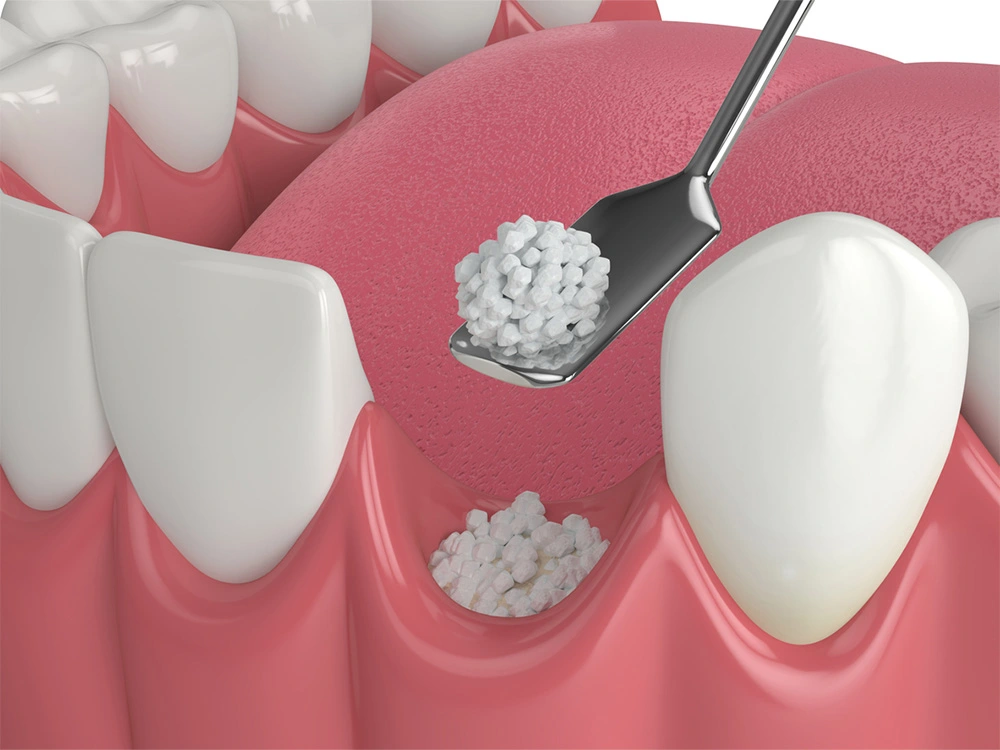
- Bone grafting
- Sinus lift procedures
- Periodontal treatment first
Mistake #7 — Poor Communication with the Clinic
Communication issues are underestimated but extremely important.
Patients often face:
- Unclear treatment plans
- Misunderstood pricing
- Lack of written documentation
- Language barriers
This leads to stress and confusion during treatment.
A professional clinic should always provide:
- Written treatment plan
- Multilingual coordinator
- Clear cost breakdown
- Pre/post instructions
Mistake #8 — Unrealistic Expectations from Social Media
Social media has created the illusion that dental transformation is:
- Instant
- Pain-free
- 100% identical for every patient
In reality, each smile is unique and depends on:
- Bone structure
- Gum health
- Facial symmetry
- Healing response
Mistake #9 — Ignoring Aftercare and Maintenance
Dental implants require lifelong maintenance.
Without proper care:
- Peri-implantitis (gum infection) can develop
- Bone loss may occur
- Implant stability decreases
Proper aftercare includes:
- Regular dental visits
- Professional cleaning every 6 months
- Proper brushing techniques
- Avoiding smoking
Patient Journey Example (Realistic Flow)
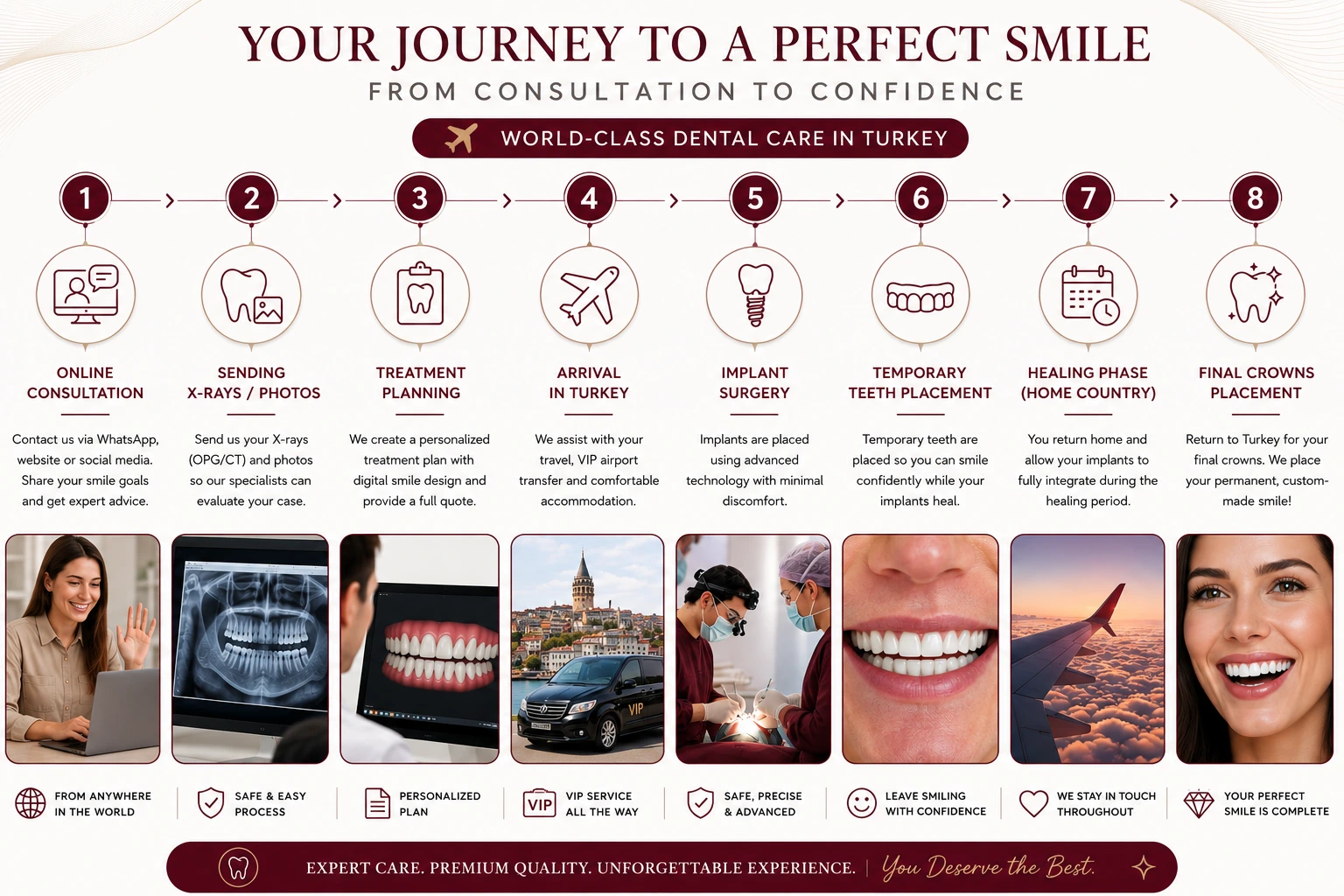
A typical international patient journey includes:
- Online consultation
- Sending X-rays / photos
- Treatment planning
- Arrival in Turkey
- Implant surgery
- Temporary teeth placement
- Healing phase (home country)
- Final crowns placement
Why Turkey Is Still a Safe and Leading Destination
Despite these mistakes, Turkey remains one of the safest and most advanced destinations for dental implants when patients choose correctly.
Advantages include:
- Highly experienced implantologists
- Advanced digital dentistry
- Affordable pricing without quality loss
- Luxury medical tourism infrastructure
- Fast treatment scheduling
📌 All treatments and services will be carried out in health institutions accredited by the Turkish Ministry of Health and possessing a certificate of authorization in health tourism.
Knowledge Is the Key to a Successful Smile Transformation
Dental implants abroad can completely transform a patient’s life — restoring confidence, function, and aesthetics. However, success is not determined by the destination alone, but by the quality of decisions made before treatment begins.
Avoiding these common mistakes ensures:
- Long-term implant success
- Natural aesthetic results
- Financial safety
- A smooth treatment experience
The key message is simple: don’t choose fast — choose informed.
Frequently Asked Questions (FAQ)
1. Are dental implants abroad safe?
Yes — dental implants abroad can be extremely safe when performed in accredited medical institutions. Countries like Turkey have internationally recognized clinics, advanced digital dentistry systems, and highly trained implant surgeons.
However, safety depends entirely on choosing the right clinic, not just the country. Patients who select based on price only are at higher risk of complications, while those who choose accredited hospitals experience success rates comparable to Europe.
2. Why are dental implants cheaper in Turkey compared to the UK or US?
The lower cost is not due to lower quality. It is mainly because of:
- Lower operational costs
- Currency exchange differences
- Government-supported medical tourism
- High patient volume (economies of scale)
Despite lower prices, many Turkish clinics use the same global implant brands (Straumann, Medentica, Medigma) as clinics in Europe.
3. How long do dental implants last?
With proper care, dental implants can last:
- 15 to 25 years
- In many cases: a lifetime
Longevity depends on:
- Oral hygiene
- Bone health
- Smoking habits
- Regular dental check-ups
4. What is the biggest mistake patients make when getting implants abroad?
The biggest mistake is choosing clinics based only on the lowest price without checking quality, implant brand, or doctor experience.
This often leads to:
- Implant failure
- Aesthetic problems
- Additional corrective costs
5. Do I need two trips for dental implants?
In most cases, yes.
- First visit: Implant placement
- Healing period: 3–6 months
- Second visit: Permanent crown placement
Some “same-day solutions” exist, but they are only suitable for selected cases.
6. Can I fly after dental implant surgery?
Yes. Most patients can fly within 2–5 days after surgery, depending on the complexity of the procedure. Clinics usually provide detailed post-operative travel guidelines.
References
- World Health Organization. (2023). Global oral health status report. WHO Press.
- International Journal of Oral & Maxillofacial Implants. (2022). Long-term survival rates of dental implants.
- European Federation of Periodontology. (2023). Guidelines for implant maintenance and peri-implant diseases.
- OECD Health Statistics. (2024). Comparative healthcare costs across Europe and OECD countries.
- Ministry of Health of the Republic of Turkey. (2024). Regulations on health tourism and accredited institutions.
- International Medical Travel Journal (IMTJ). (2023). Global trends in dental tourism and patient mobility.
.png)
.png)



.png)


